
Ground Segment
Ground Segment -
SPACEBEL is a recognised developer of IT systems for the ground segment to support both the mission operations and the user operations. The Ground Segment Department is able to provide solutions covering almost all aspects of the ground segment systems. Our background comprises several applications that are ultimately deployed to operational services.
For the satellite control centres, the Ground Segment team has developed solutions especially for smallsat missions starting with the successful PROBA series (ESA). We develop turnkey systems or specific functions for the institutional and the Agencies core infrastructure. We also provide advanced and low-cost solutions for small missions and small constellations. Coupled with SPACEBEL satellite simulation framework, our systems can also be used in the context of space system Assembly Integration and Verification.
Operating a spacecraft such as a satellite implies the capability to plan and schedule the platform and the payload activity. This is one of the main functions developed by SPACEBEL and delivered to CNES and ESA mission operations centres for Earth observation and telecom missions. Thanks to a strong background in automation and mission planning technology, solutions are built on top of a generic in-house software which is designed to meet specific customer requirements. They can be complemented by satellite simulations, optimisation software and artificial intelligence tools.
The payload data ground segment (PDGS) features several functionalities, among others the mission planning, acquisition, processing, calibration and archiving of the payload data. It also creates the relevant catalogue and distributes on demand the resulting science or imaging data. SPACEBEL develops and deploys operational systems implementing such functionalities or the entire PDGS as a standalone facility.
As part of the Ground Data Systems, SPACEBEL develops instrument simulators and provides solutions for the instrument data processing. Our main achievements in the domain of Ground Prototype Processors and Instrument Data Simulators are related to applications in the field of Earth observation namely radar, spectrometry and radiometry technology. These processors are used for the sake of the mission or to evaluate the performance of the instrument. They may be used to support the instrument development or they may be integrated after industrialisation into the Payload Data Ground Processing Centres.
Reference Projects
- PROBA Control Centres
SPACEBEL has developed all satellite control centres for the ESA PROBA missions. The PROBA-2 satellite for sun observation and the Proba-1 Earth observation mission are still active today whereas Proba-V, the small vegetation watcher “made in Belgium” has come to an end. The Proba-3 formation flying mission has completed an impressive first year in orbit, marking major technological and scientific milestones in the field of solar corona observation. The development of PROBA-Altius, dedicated to the daily analysis of the atmospheric ozone, is well advanced. The systems operated from ESEC, an ESA facility in Redu (Belgium), are largely automated so as to enable unsupervised passes with automatic uplink of telecommands, telemetry reception and processing and products distribution.
- ALTIUS PDGS
SPACEBEL develops the Payload Data Ground System for the PROBA Altius spacecraft. The mission aims to provide a global composition of the atmospheric limb, resulting in the provision of atmospheric ozone as main product and aerosols, azote dioxide as secondary products. The system distributes the processed data 3 hours after their capture by the satellite. SPACEBEL leads an international consortium composed of science and industry partners including the Royal Belgian Institute for Space Aeronomy and the University of Saskatchewan (Canada). It will be operated from the B-USOC in Belgium.
- ESA Common Software Infrastructure
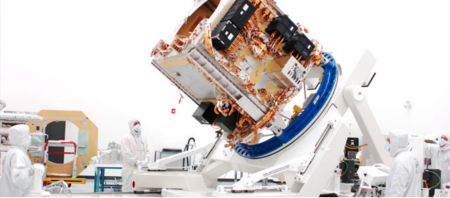
SPACEBEL is a key player in the transition of ESA Space Systems Monitoring and Control infrastructure. The company make part of the industrial team in charge of the development of the new European Ground Systems Common Core (EGS-CC) and recently realised the first adaption of it to small missions. SPACEBEL now contributes the development of a deployment model for the future mission Mission & Control infrastructures taking advantage of the share of resources and scalability of architectures.
- Hera CMOC
SPACEBEL is in charge of Hera’s Cubesat Mission Operations Centre (CMOC) development. Located in Redu (Belgium), it will oversee mission operations and control the European Milani and Juventas cubesat duo. Its role: manage mission requests, flight dynamics, telemetry and data exchange between the main spacecraft and its bread-box sized cubesats.
The purpose of the latter is twofold:
· collect more detailed scientific data on the Dimorphos asteroid and its environment in order to gain a better understanding of the structure and composition of asteroids
· evaluate novel inter-satellite link technology and demonstrate cubesat technology use in a deep-space environment.
Juventas will perform radar soundings whereas Milani will scan the celestial bodies in a wider range of colours than the human eye can see thanks to its hyperspectral imager.
Technologies & Skills
SPACEBEL contributes to the advanced system and mission operation concepts by performing studies, technology investigations and prototyping related to the implementation and validation of new subsystems and tools. The current technology shift from standalone monolithic software to cloud-based micro-services architecture is one exciting example and the Ground Segment engineering team of SPACEBEL takes part in it. Among the leading-edge R&D activities performed internally, we refer to the following objectives:
- Migrating control centre software from a monolithic application that can monitor and control a single satellite to a micro-services system that can handle a whole constellation of satellites
- Developing Cloud native applications using container and cloud orchestration technologies
- Promoting the use of Web applications
- Offering control centre-as-a-service solutions
- Deploying building blocks for advanced automation by integrating machine learning, optimization problems and artificial intelligence techniques
- Securing the dependability and cyber-security of operation systems
ESA Common Software Infrastructure